

Monitor Heater Problems Explained by Error Code and Symptom
Most Monitor heater problems come down to fuel not reaching the burner, blocked combustion or circulation air, or a dirty flame rod that cannot confirm the flame. An E13 usually means the heater never lit, while an E14 means it lit and then lost its flame.
You probably noticed the trouble on a cold morning. The burn light flickers, the blower hums, and then the display locks out. Because these heaters are no longer made, every fix you can safely handle yourself saves you a hunt for scarce parts and busy technicians.
Below, you will match each code and symptom to its likely cause, try the checks that are safe for owners, and spot the point where carbon monoxide and fire risk mean a qualified technician should take over.
What Your Monitor Heater Error Code Is Telling You
Monitor heaters with a digital display, such as the 2200 and 2400, report faults as E codes. The code does not name a broken part. It tells you which step of the startup or burn cycle failed, which narrows the search a lot.
| Code | What it usually points to |
|---|---|
| E01 | Flame rod senses flame before ignition |
| E05 | Wrong voltage reaching the control board |
| E06 | Solenoid pump control fault |
| E08 | Weak air flow from combustion blower |
| E13 | No ignition at startup |
| E14 | Flame lost after normal running |
The difference between E13 and E14 matters most. If your heater shows E14, it lit normally first, so the igniter, combustion blower, and air switch have already done their jobs. An E13 leaves all of those parts on the suspect list.
After either code, the control locks out. Turn the heater off with its power button and unplug it for about a minute to clear the lockout. Then find the cause before you restart it again and again.
Why a Monitor Heater Fails to Ignite on Startup
An E13 means the heater went through its startup sequence but never saw a flame. Sometimes the burn light comes on and the combustion fan runs, but the circulation fan never starts, and the light blinks before the code appears.
No fuel at the burner: An empty tank, a fuel valve left partly closed after summer, or a clogged fuel strainer starves the burner before it can light.
Ignition parts: A failed igniter, solenoid pump, or circuit board can stop ignition even when fuel is present.
Wiring and flame rod position: Loose or incorrect wiring, or a flame rod that touches burner parts, can confuse the control.
Safety switches: An open air pressure switch or overheat switch blocks ignition on purpose.
You can safely check the fuel level, open every valve between the tank and the heater, and clean the fuel strainer as your manual describes. Testing the igniter, pump, board, or safety switches is a job for a technician who knows these units.
Flame Failure After Running Usually Means Air or Fuel Trouble
An E14 shows up after the heater has been burning for a while. The flame simply goes out, and the control shuts everything down for safety.
The usual causes are blocked circulation air at the room air inlet or outlet, a fan cage packed with dust, or a fuel supply that slowly fades. A filter that clogs over hours, a small air bubble in the line, or a tank running low can all starve the flame mid-cycle.
A dirty or corroded flame rod is another suspect. The heater may still be burning, yet the board cannot read the flame signal and shuts down anyway.
Start with the easy checks. With the heater off, unplugged, and fully cool, vacuum the front grille, the air filter, and any dust you can reach around the circulation fan. Then look at the outdoor vent terminal for snow, ice, leaves, or nests that block the air intake.
If the code keeps returning after cleaning, have a technician inspect the flame rod, its gasket, and the fuel delivery. Pressure checks and burner work are not owner tasks.
How to Stop a Monitor Heater That Keeps Shutting Off
When the shutdown happens tells you more than the shutdown itself. Match your pattern to the most likely cause.
Shuts off within a few minutes: Air in the fuel line, a nearly empty tank, or a weak flame signal from a dirty flame rod is the likely cause.
Runs for hours, then quits: A filter slowly loading with debris, a dropping tank level, or overheating from a dusty fan and blocked grille is more likely.
Quits after you refill the tank: Air drawn in when the tank ran dry, or sediment stirred up during filling, can interrupt fuel flow.
Goes dark with no code at all: Check for a loose plug, a tripped breaker, or a power blink. Plug the heater straight into a grounded wall outlet instead of an extension cord or power strip.
Fix the matching cause before restarting. Repeated restarts without a fix only add wear and can hide a bigger fault.
Monitor 441 Heater Problems Owners Report Most Often
The Monitor 441 is a smaller vented model, and it shows many of the same faults as its larger siblings. Here is what tends to go wrong and where to look first.
Will not ignite: Confirm fuel is reaching the heater, every valve is open, and the strainer is clean. If those check out, the igniter or flame sensor needs a technician.
Starts, then shuts down: Look for blocked combustion air at the vent terminal, a dirty air filter, or a dust-packed fan.
Weak heat: Check the temperature setting and any setback program first, then clean the filter and grille so room air can pass over the heat exchanger.
Humming, knocking, or gurgling: Knocking or gurgling often means air in the fuel line. A steady loud hum or grinding can point to worn blower bearings.
Fuel smell or wet spots: Shut the fuel valve and stop using the heater. Loose fittings or a damaged line need prompt professional repair.
Low Heat Output Often Starts With Fuel or Settings
A heater that runs but leaves the room cool is not always broken. Start with the simple things before you assume a failed part.
Check the set temperature, the mode, and any timer or setback program. A schedule set for nighttime can make the heater look weak during the day.
Restricted airflow is the next suspect. A clogged filter or a grille blocked by furniture traps heat inside the cabinet, and the heater may cycle down to protect itself.
Low fuel flow also lowers output. A partly closed valve or a dirty strainer can let the heater run, but only at a reduced burn.
Finally, compare the room to the heater’s rated capacity. A drafty space, an open stairwell, or a bigger room than the unit was sized for will always feel cool. This guide to cold weather heater failures covers more of these situations.
Noises Soot and Smells That Signal Combustion Trouble
Your senses can catch combustion problems before an error code does. Pair each sign with its usual cause.
- Yellow, lazy flame: Not enough combustion air, often a blocked intake, or the wrong fuel grade
- Soot behind the heater with popping sounds: A loose flue or vent pipe connection
- Window sooting up quickly: Heavy fuel or poor combustion that needs service soon
- Gurgling or knocking pump: Air in the fuel line or a fuel-starved pump
- Loud hum or grinding: Worn bearings in the combustion or circulation blower
A faint dusty smell the first time you run the heater each season usually fades as the dust burns off. A smell that stays, smells like exhaust, or gets stronger means you should shut the heater off. This article on a burning smell explains how to tell harmless odors from warning signs.
Turn the heater off and let it cool fully before you tighten any loose vent pipe connection. Ongoing soot or a yellow flame needs a technician.

Fuel Supply Mistakes That Cause Repeat Monitor Lockouts
Many repeat E13 and E14 codes come from the fuel side, not from a failed part. These mistakes are easy to make and easy to fix.
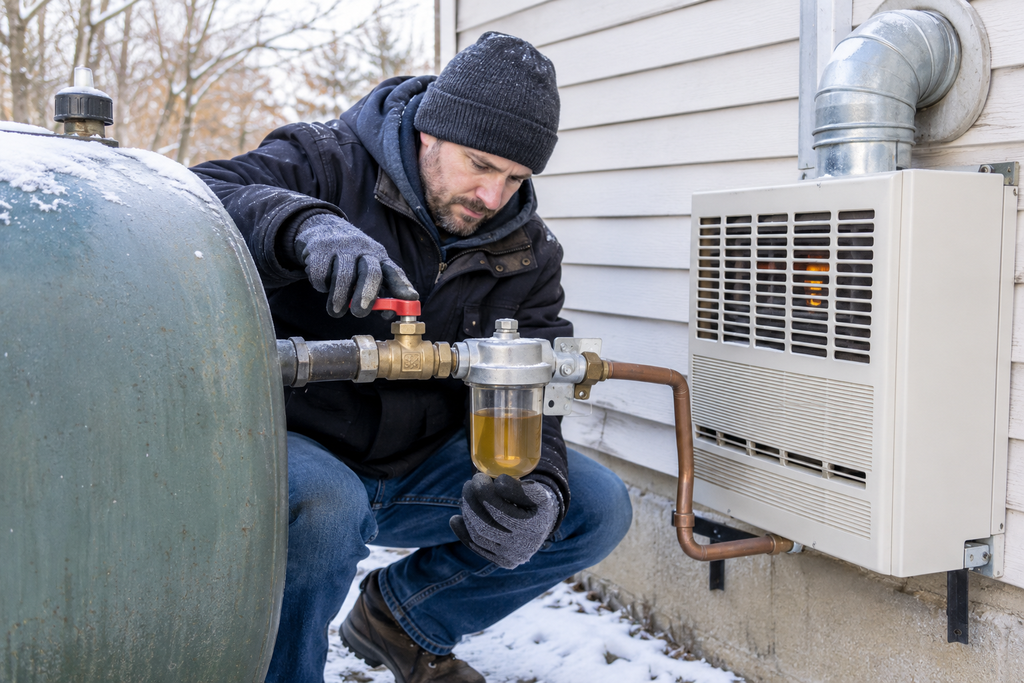
Leaving valves partly closed. Owners who shut the fuel off for summer sometimes reopen only one valve, or open it only part way. Check every valve from the tank to the heater.
Setting the tank too low. Gravity-fed setups need enough height to push fuel through the heater’s fine filter. A small tank sitting low can work when full, then fail as the level drops.
Running the tank dry. An empty tank pulls air into the line, and the heater may keep locking out until that air is bled out as your manual directs.
Ignoring water and sludge. Condensation and sediment settle at the bottom of outdoor tanks and end up in the filter and strainer.
Using the wrong fuel. Use only the fuel your manual lists. For kerosene, federal safety guidance calls for certified 1-K grade kerosene, since other grades can release more pollutants and different grades can look the same.
Skipping strainer cleaning. Going by the troubleshooting chart in the owner’s manual, a severely clogged strainer can also mean the constant level valve and pump screen need a dealer cleaning.
Handle fuel only with the heater off. If you are unsure about refueling a running heater, read up before your next fill.
Simple Reset Routine to Try Before Anything Else
Use this routine once when a code appears. If the fault comes back, stop and move on to the matching section above or call a technician.
- Step 1: Press the power button to turn the heater off, then unplug it for about a minute to clear the lockout.
- Step 2: Check the fuel level and confirm every valve between the tank and heater is fully open.
- Step 3: Look at the outdoor vent terminal and clear snow, ice, leaves, or debris.
- Step 4: With the heater cool, vacuum the front grille and clean the air filter.
- Step 5: Inspect and clean the fuel strainer as the manual describes.
- Step 6: Plug the heater directly into a grounded wall outlet.
- Step 7: Restart once and watch the burn light, flame, and both fans through the full startup.
Seasonal Maintenance That Prevents Most Monitor Heater Problems
Most lockouts trace back to dust, dirty fuel, or neglected air paths. A steady routine keeps them away.
Before the season: Check the tank for water and sludge, replace or clean the fuel filter, open every valve, and clean the strainer. If the heater sat unplugged all summer, expect to bleed air from the line before the first start.
During the season: Clean the air filter and front grille regularly, keep furniture and curtains clear of the airflow, and check the outdoor vent terminal after storms.
Every year: Public health guidance recommends annual service by a qualified technician for oil and other fuel-burning heating equipment. For a Monitor, that visit should cover the burner, flame rod, blowers, and vent connections.
Between visits: Note any new noise, smell, or code and its timing. That record helps a technician find the cause faster.
Are Monitor Heaters Safe to Keep Running Today
A well-maintained Monitor is a direct-vent heater. It draws combustion air from outside and sends exhaust back outside through a sealed vent, which keeps combustion gases out of the room when everything is intact.
The risk grows with age and neglect. A loose or damaged vent pipe, a cracked part, or poor combustion can let exhaust escape, and carbon monoxide gives no smell or color warning.
Install battery-powered carbon monoxide alarms on each level and near sleeping areas, and test them regularly. Learn more about carbon monoxide from kerosene heaters and the warning signs to watch for.
Never bypass an overheat switch, air switch, or any other safety device to keep the heater running. Those parts shut the heater down for a reason.
Repair or Replace an Aging Discontinued Monitor Unit
The manufacturer stopped making Monitor heaters years ago and announced that factory parts would be made only through 2014. Some independent suppliers and rebuilders still offer parts and refurbished units, but availability varies by model and region.
A simple rule of thumb helps. Repair when the heat exchanger and burner are sound and the part you need is still available. Replace when the heat exchanger is cracked, a control board cannot be found, or lockouts keep returning after a full professional service.
If you replace, a vented heater can often use the existing wall penetration, which reduces installation work. Ask an installer to compare fuel type, venting, and running costs before you choose.
When a Qualified Technician Should Take Over the Job
Owner checks cover fuel, air, and cleaning. Stop and call a technician who services vented kerosene heaters when you notice any of these signs.
- A fuel leak, wet fittings, or a strong fuel smell
- A carbon monoxide alarm, or headaches and dizziness while the heater runs
- Ongoing soot, a yellow flame, or an exhaust smell indoors
- E01, E05, E06, or E08 codes, which point to sensing, electrical, or blower faults
- E13 or E14 returning after the fuel and air checks
- An overheat switch that trips again and again
If a CO alarm sounds, get everyone outside to fresh air first and call for help before you think about the heater.
Quick Answers to Common Monitor Heater Questions
Why Did They Stop Making Monitor Heaters?
Monitor heaters were built in Japan by Hitachi and sold in the US by Monitor Products. Hitachi ended production, and dealers were told factory parts would continue only through 2014 while existing warranties were honored. After dealers sold their remaining stock, no new units followed. That is why owners now depend on independent repair shops, rebuilt units, and aftermarket parts, and why keeping a working heater well maintained matters more than it used to.
Can I Burn Diesel or No 2 Fuel Oil in a Monitor Heater?
No. Use only the fuel your owner’s manual lists, which for these heaters is kerosene or a low-sulfur No 1 oil depending on the model. Heavier fuels such as No 2 oil or diesel burn with a yellow flame, soot up the window and burner quickly, and can trigger repeat lockouts. Burning the wrong fuel can also damage parts that are now hard to replace, so drain and flush any wrong fuel before restarting.
Why Is My Monitor Heater Running but Not Blowing Hot Air?
The circulation fan normally waits until the burner has warmed the heat exchanger, so a short delay at startup is normal. If the combustion fan runs and the burn light is on, but the circulation fan never starts and the light begins blinking, the burner likely never lit. That pattern usually ends in an E13. Check fuel delivery first, then have a technician test the igniter and controls if fuel is reaching the heater.
Does a Monitor Heater Work During a Power Outage?
No. A Monitor heater needs electricity for its igniter, fuel pump, blowers, and control board, so it stops when the power goes out. After power returns, you may need to restart the heater and check that your temperature and timer settings are still correct. If outages are common where you live, plan a separate safe backup heat source rather than relying on this heater during a long outage.
What Should I Do About an E05 Code?
An E05 points to incorrect voltage reaching the control board. Start by plugging the heater straight into a grounded wall outlet, not an extension cord or power strip, and check whether other appliances on the same circuit cause flickering lights. Loose outlets and weak circuits are common causes. If the code returns on a good outlet, the board or its power supply needs a technician, since electrical faults can damage hard-to-find parts.
Why Does My Monitor Heater Shut Off After I Refill the Tank?
Refilling can stir up water and sediment from the bottom of the tank, which then flows into the filter and strainer. If the tank ran completely dry before refilling, air may also be trapped in the fuel line. Let the fuel settle, check and clean the strainer, and bleed air from the line as your manual describes. Keeping the tank from running empty avoids most of these shutdowns.
How Often Should a Monitor Heater Get Professional Service?
Plan on a professional inspection once a year, ideally before the heating season starts. During that visit, a technician can clean the burner and flame rod, check the blowers and fuel delivery, and confirm the vent pipe is sealed. Owners can handle filter and grille cleaning between visits. Heaters that burn a lot of fuel or show soot, odors, or repeat codes may need attention sooner than the yearly visit.
Keeping Your Monitor Warm and Reliable This Winter
Most Monitor heater problems trace back to a short list of causes: fuel that cannot reach the burner, air paths blocked by dust or debris, a dirty flame rod, or aging ignition and control parts. The codes help you sort them, with E13 pointing to startup failure and E14 to a flame lost mid-run.
Owner fixes center on open valves, clean fuel, a clean strainer and filter, and a clear outdoor vent. Anything involving fuel leaks, electrical codes, soot, or safety switches belongs with a qualified technician.
Prevention keeps you warm with fewer surprises. Use the right fuel, keep the tank from running dry, clean the air paths during the season, book yearly service, and keep working carbon monoxide alarms near the heater and sleeping areas.
