

Heater Smells Like Burning and What to Do Next
Disclosure: As an Amazon Associate, I earn from qualifying purchases. Learn more
A heater that smells like burning is usually just dust cooking off the heating parts after months of rest, and the smell should fade within an hour or two. A plastic, rubber, or electrical odor is different, so switch the heater off and unplug it or cut its power.
Picture the first cold night of the season. You turn the heat on, and a sharp, scorched smell drifts through the room. Is it normal, or is something about to fail? The type of smell, how long it lasts, and whether it comes with smoke or noise usually give you the answer.
This guide helps you sort harmless odors from real warning signs, fix the simple causes safely, and know exactly when to call a qualified technician.
Is a Burning Heater Smell Ever Normal?
A light dusty or burning smell is normal in one situation: the first run after the heater has sat idle for weeks or months. Dust that settled on hot surfaces burns off, and the odor usually fades within an hour or two.
Anything longer, stronger, or sharper than that deserves attention. Watch when the smell starts, how it changes over time, and what comes with it, such as smoke, humming, or a tripped breaker.
| What You Notice | Likely Meaning |
|---|---|
| Dusty smell on the first run of the season | Dust burning off, usually harmless |
| Smell fades within an hour or two | Normal start-up odor |
| Sharp plastic or rubber smell | Melting debris or an overheating part |
| Hot wiring or metallic odor | Motor or wiring trouble |
| Rotten egg odor | Possible gas leak |
| Oily or chemical odor | Fuel, oil, or coating residue |
Six Common Causes and Solutions for a Burning Heater Smell
Most burning odors trace back to one of six causes. Check them in this order, from the simplest to the most serious.
1. Dust Buildup on Heating Parts
Dust settles on elements, burners, and blower parts while the heater sits idle. When it heats up, that dust burns and creates a dry, scorched smell.
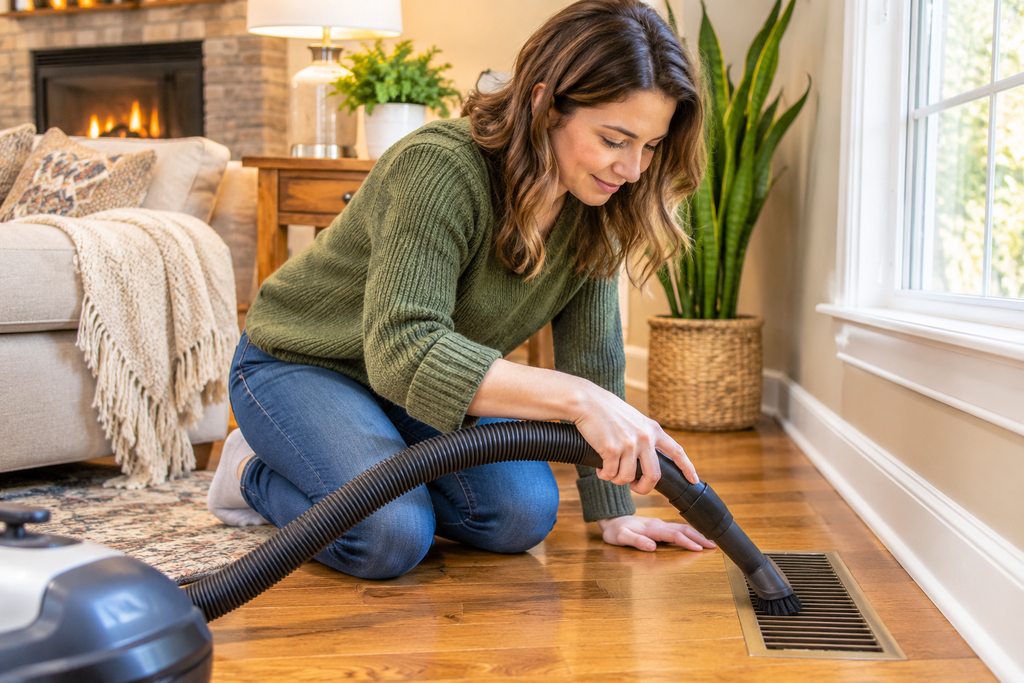
Solution: switch the heater off, let it cool, and clear visible dust from vents and grilles with a vacuum brush. Then run it again in a ventilated room and see whether the smell fades.
2. Dirty Filters and Blocked Airflow
A clogged filter or blocked vent restricts airflow, so internal parts run hotter than they should. That can create a burning or musty odor and strain the system.
Solution: replace a dirty filter and move furniture, rugs, or boxes away from registers and grilles. Filters are commonly checked every one to three months, depending on use and filter type.
3. Overheating Parts
A blower motor with worn bearings or a heating element running too hot can give off a metallic or electrical burning smell. Humming or grinding often comes with it, and a safety shutoff may switch the unit off.
Solution: turn the heater off, let it cool, and do not keep restarting it. A technician should inspect the motor, bearings, and limit controls.
4. Electrical Wiring Faults
Damaged wires, loose connections, or a failing control board can melt insulation. The result is a sharp, acrid odor that often smells like plastic.
Solution: switch the unit off at the power source and stop using it. Wiring problems are a fire risk, so a licensed technician needs to inspect it before it runs again.
5. Gas, Oil, or Chemical Odors
A rotten egg smell can point to a gas leak, and an oily smell near a furnace can point to a fuel problem. If you smell gas, leave the building and call the gas utility or emergency services from outside. Avoid light switches and anything else that could spark.
Gas- and oil-burning furnaces also produce carbon monoxide, which has no smell, as explained in these furnace carbon monoxide risks. The absence of an odor does not mean the air is safe.
6. Worn or Failing Equipment
If burning smells keep coming back after you clean filters and vents, the parts may be wearing out. Scorch marks, repeated shutoffs, or rising noise point the same way.
Solution: ask a technician whether a repair makes sense or whether the unit has reached the end of its service life.
Safe First Steps When the Smell Starts
The first few minutes matter most. Take these steps before you try any fix.
- Turn the heater off at the thermostat or switch, and unplug it if it is portable.
- If you smell rotten eggs, see smoke, or see flames, leave and call emergency services or your gas utility from outside.
- If there is no gas smell or smoke, open a window and wait about ten minutes.
- Restart the heater once and note whether the smell returns, how strong it is, and where it is strongest.
- Stop right away if the smell is sharp, chemical, or electrical, and keep the heater off until it is checked.
Official safety guidance, such as these official space heater safety tips, commonly advises keeping a portable heater at least three feet from bedding, drapes, and furniture.
What Burnt Food and Hair Smells From a Heater Mean
People often describe heater smells by comparing them to food or hair. The comparison is not a lab test, but it can point you toward a likely source.

Burnt Toast Smell
A dry, scorched, toast-like smell usually comes from dust, lint, or crumbs burning on hot surfaces. A dirty filter can make it worse by forcing parts to run hotter.
If cleaning the filter and vents makes it fade, dust was the cause. If it stays or grows stronger, treat it as overheating wiring or parts and have the heater checked.
Burnt Popcorn Smell
A burnt popcorn smell can come from dust, debris, or overheating electrical parts. The pattern matters more than the comparison.
A smell that fades within an hour or two is most likely dust. One that stays, returns on every run, or has a plastic edge points to parts or wiring, so switch the heater off and call a technician.
Burnt Hair Smell
A burnt hair smell usually means hair, fur, or fibers have collected on the fan, element, or filter and are now heating. Homes with pets see this more often because pet hair and dander build up inside heating systems.
Solution: turn the heater off, let it cool, and vacuum vents, grilles, and fan openings with a brush attachment. Replace the filter if the unit has one.
Trapped insects or rodents can burn too, and rodents may chew wires. A different smell, like a fishy heater odor, can point to that kind of problem. If the vents are clear and the smell stays, call a technician.
Burning Plastic Smell From a Heater Needs Quick Action
A plastic or rubber smell is more urgent than a dusty one. It usually means something is melting or an electrical part is overheating.
Common sources include toys or other small objects that fell into a vent, plastic parts running too hot because airflow is blocked, and wiring insulation breaking down. Burning plastic gives off fumes that are harmful to breathe.
- Turn the heater off and cut power at the unit.
- Ventilate the room with a window or exhaust fan.
- Once the heater is cool, check nearby vents and registers for objects you can remove safely.
- Replace a dirty filter, then test the heater once.
- If the smell returns or you cannot find the cause, stop using the heater and call a technician.
On portable electric heaters, also check the cord and plug. A plug that feels hot is a warning sign, so unplug the heater and have a qualified repair person look at it before using it again.
Car Heater Burning Smell Causes and Fixes
A burning smell from car vents has a different set of causes than a home heater. The first cold start of the season can burn off dust, but a smell that lingers deserves a closer look.
- Coolant leak: coolant dripping onto hot parts can send a burning odor through the vents and may also affect engine cooling.
- Oil leak: oil that reaches hot engine or exhaust parts can burn and be drawn into the cabin. This guide on oil smell in a car covers it in more detail.
- Electrical fault: an overheating blower motor or damaged wiring can smell like hot plastic.
Some drivers describe the smell as burnt popcorn. As with home heaters, the description matters less than whether it fades, returns, or comes with warning signs.
If the smell is strong or you see smoke, pull over safely and turn the engine off. Do not open a hot cooling system. Low coolant can also leave the cabin cold, and this page on a car heater blowing cold air explains that side. Have a mechanic check any smell that keeps coming back.
Heater Smells Like Burning When First Turned On
A burning smell the first time you turn a heater on after a long break is common. Dust and light debris that collected on heating parts burn off once things get hot. A brand-new heater can smell too, because protective coatings and manufacturing residue heat up for the first time.
A few checks beforehand make the first run calmer and safer.
- Clear dust from vents and the area around the unit before you switch it on.
- Check the filter and replace it if it looks dirty.
- Run the heater in a room with fresh air coming in, and stay nearby.
- Expect the smell to fade within an hour or two. A new furnace may take a few hours.
- Stop and investigate if the smell is plastic, electrical, or chemical, stays past a few hours, or grows stronger.
When to Call a Technician About Heater Burning Smells
Some burning smells are not worth a do-it-yourself fix. Call a licensed technician when you notice any of these signs.
- The smell lasts beyond a few hours or returns after cleaning.
- You notice a plastic, electrical, or chemical odor.
- There is smoke, sparks, scorch marks, or melted parts.
- The breaker trips or the unit keeps shutting off.
- Grinding, squealing, or humming comes with the smell.
A professional visit usually covers the heat exchanger and burners, wiring and control board, blower motor, filter, and ducts. For gas systems, it also includes a gas leak test. Repairs involving wiring, gas lines, or internal parts should stay with a qualified technician.
For a portable heater, stop using it and contact the maker or a qualified repair person.
Simple Habits That Keep Burning Smells Away From Heaters
- Replace filters on a regular schedule, commonly every one to three months, and more often with pets or heavy dust.
- Book a professional heating check every year before the cold season starts.
- Vacuum vents and keep the area around the heater clear of storage, dust, and clutter.
- Keep registers and ducts free of small objects.
- Install smoke alarms on each level of your home and a carbon monoxide alarm outside sleeping areas.
Small habits like these prevent most avoidable odors and make real problems easier to spot.
Frequently Asked Questions
Can breathing a burning heater smell harm my health?
Burning plastic and insulation can release fumes that are harmful to breathe, so ventilate the room and keep children and pets away until the cause is fixed. Headache, dizziness, nausea, weakness, or confusion after heater use can also point to carbon monoxide exposure, even when you smell nothing unusual. If those symptoms appear, move everyone into fresh air and call emergency services. A working carbon monoxide alarm gives the early warning your nose cannot.
Can a heater cause a fire before any smoke appears?
Yes. Overheated wiring, failing connections, or a damaged motor can scorch insulation well before flames or visible smoke show up, which is why a sharp electrical smell deserves a quick response. Switch the unit off at the power source, keep curtains and other combustibles away from it, and do not restart it. Make sure each level of your home has a working smoke alarm, and let a licensed technician inspect the heater before it runs again.
Why does a water heater smell like burning?
A water heater can smell like burning when dust or lint burns near the burner area or element, when wiring insulation overheats, or when a leak drips onto a hot part. For an electric model, cut power at the breaker. For a gas model, follow the manufacturer’s shutdown steps, and if you smell rotten eggs, leave and call the gas utility. Then have a licensed plumber or technician inspect the unit before using it again.
How can I tell whether the smell is coming from the heater or something else?
Follow your nose room by room, then compare with the heater switched off for a few minutes. Burning odors can also come from a dryer, toaster oven, refrigerator, or other appliance, and a hot outlet or cord can smell similar. Unplug any suspect appliance you can reach safely, and cut power at the breaker if needed. If the odor fades when the heater is off and returns when it runs, the heater is the likely source.
Can a heater smell like burning even when it is switched off?
Yes, for a few reasons. Parts stay hot for a while after shutdown, so a lingering odor can last several minutes. Smells can also cling to dust, fabric, and ductwork near the unit. If the odor continues for hours with the heater fully off or unplugged, look for another source nearby. If the heater stays warm or powered when it should be off, stop using it and have a technician check the controls.
Closing Thoughts on a Burning Heater Smell
A short-lived dusty smell on the first run is usually harmless, while plastic, electrical, gas, or smoke signs call for switching the heater off right away.
Most other cases trace back to dirty filters, blocked airflow, trapped debris, or worn parts, and simple cleaning solves many of them. Regular filter changes and a yearly professional check keep the problem from coming back.
