Disclosure: As an Amazon Associate, I earn from qualifying purchases. Learn more
Ceramic heaters warm air via a ceramic element and fan, circulating heat throughout a space. Radiant heaters emit infrared rays to directly warm objects and people in their path, offering immediate, focused warmth.
You need efficient heating, and understanding these core differences helps choose. Ceramic heaters excel at heating entire rooms quickly. A fan blows air over hot ceramic plates, distributing warmth evenly across small to medium areas. This makes them ideal for shared spaces like living rooms or offices. They often include adjustable thermostats and multiple heat settings for control. Be aware, the fan creates some noise, and airflow can feel drying over time.
Radiant heaters work differently, sending out infrared rays that directly heat surfaces and skin. You feel the warmth instantly, like sunshine, without waiting for air to circulate. This silent operation suits bedrooms or quiet zones perfectly. They provide highly targeted heat, making them energy-efficient for personal use near a desk or chair.
Since they don’t rely on air movement, radiant heaters won’t dry the air or stir dust, benefiting those with allergies. Their limitation is spot heating; they won’t warm an entire room uniformly like a ceramic model might. Safety is key for both; always ensure tip-over protection and overheat shutoff features are present.
Core Strengths And Performance Differences
Ceramic heaters operate through convection heating, using an internal fan to blow air across a hot ceramic element. This method warms the surrounding air efficiently, circulating heat throughout small to medium-sized rooms. You get quick, widespread warmth ideal for spaces like offices or living areas. Radiant heaters function via infrared technology, emitting invisible rays that directly warm people and objects in their line of sight.
They provide instant, targeted heat without moving air, making them silent and draft-free. Radiant models excel at spot heating tasks like warming your feet at a desk. Ceramic units distribute heat more evenly but can create noise and dry air. Radiant options conserve energy by heating only occupied zones but lack whole-room coverage. Safety features like tip-over protection and overheat shutoff are common to both types.
Simple Setup And Operation
Place ceramic heaters on stable, level surfaces away from furniture or curtains. Maintain at least 3 feet of clearance on all sides for safe airflow. Plug directly into a wall outlet—avoid extension cords. Use the adjustable thermostat to set your desired temperature; select low/high/ECO modes based on needs. The fan operates automatically.
Radiant heaters require similar placement: flat, non-flammable surfaces with ample clearance. Position them facing your seating area for direct warmth. Plug into a dedicated outlet, choose power settings (often 600W/900W), and angle the heating element as needed. Both types feature portable designs with handles or wheels for easy relocation. Always test safety functions after setup.
Top Applications For Each Heater Type
Optimal Ceramic Heater Uses
- Full Room Warming: Efficiently heats enclosed spaces up to 200 sq ft.
- Shared Living Areas: Circulates warmth evenly for families.
- Workspaces: Maintains consistent background temperatures.
- High-Humidity Spots: Fan-assisted heat reduces dampness.
- Pet Zones: Safe exteriors prevent burns during use.
Ideal Radiant Heater Uses
- Personal Spot Heating: Warms individuals reading or working.
- Bedroom Comfort: Silent operation won’t disrupt sleep.
- Allergy-Prone Spaces: No air movement stirs dust.
- Garages/Workshops: Direct heat in drafty environments.
- Elderly Care: Immediate warmth without waiting.
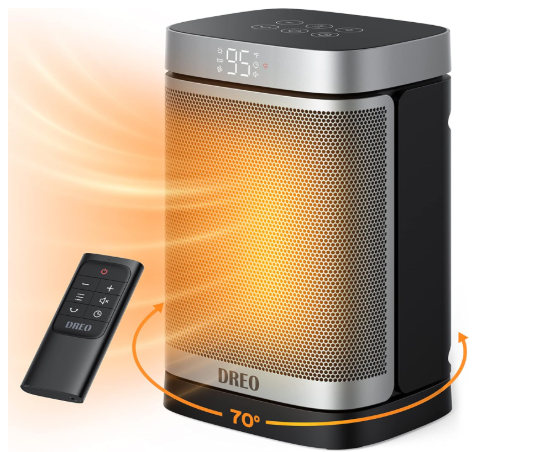
Ceramic Heater: Dreo Space Heater with 70° Oscillation
Rapid, focused warmth defines the Dreo Space Heater, leveraging ceramic technology for instant heat delivery. Its 70° wide oscillation efficiently distributes warmth across rooms up to 200 sq ft, eliminating cold spots. The adjustable thermostat maintains consistent temperatures, while three modes (High/Low/ECO) optimize energy use—reducing costs without sacrificing comfort. Quiet operation (under 40 dB) ensures undisturbed sleep or work. Safety is paramount with tip-over protection and overheat auto-shutoff, plus a cool-touch exterior safe for kids and pets. A portable handle and compact design simplify moving between rooms.
Key Benefits
- Ultra-fast ceramic heating
- 70° wide oscillation coverage
- ECO energy-saving mode
- Tip-over and overheat protection
- Near-silent operation
Compatible For
- Bedrooms, offices, and living rooms
- Small to medium indoor spaces
- Pet-friendly environments
Special Note: Place on a flat, stable surface away from flammable objects. Never cover the heater. Unplug when unattended. Not for bathroom use. Manufacturer warranty applies.
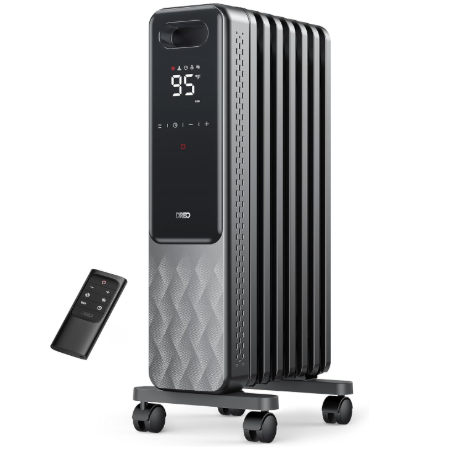
Radiant Heater: Dreo Electric Radiator with Safety Shield
The Dreo Radiator Heater uses gentle radiant heat to warm people and objects directly, creating draft-free, silent comfort ideal for sensitive ears. Its oil-free design heats up swiftly without drying air, while the adjustable thermostat and three heating modes (900W/1300W/ECO) ensure precise temperature control. Energy efficiency shines in ECO mode, maintaining warmth at minimal cost. Safety features include overheat protection, tip-over auto-shutoff, and a cool-touch shell safe for children. The slim, modern build fits discreetly in corners, and wheels enable easy repositioning.
Key Benefits
- Silent radiant heat technology
- ECO mode reduces energy use
- No dry air or drafts
- Tip-over and overheat safety
- Portable with included wheels
Compatible For
- Bedrooms and living areas
- Allergy-sensitive households
- Extended overnight use
Special Note: Keep 3 feet clear of curtains or furniture. Avoid high-humidity areas. Always supervise children/pets nearby. Follow voltage requirements.
Selection Criteria For Your Space
Room Size And Layout
Ceramic heaters suit closed rooms under 200 sq ft with airflow. Radiant units fit open floor plans where direct exposure is possible.
Heating Speed Requirements
Radiant provides instant warmth upon activation. Ceramic may need minutes for full room coverage.
Noise Sensitivity Levels
Choose radiant for absolute silence. Ceramic fans generate soft but audible airflow.
Safety Priorities
Verify tip-over switches and overheat protection for both types. Cool-touch exteriors are vital around children.
Energy Efficiency Goals
Radiant heaters save power in targeted applications. Ceramic ECO modes optimize whole-room efficiency.
- Learn More: 4 Best Wall Mounted Electric Heaters
Ideal User Profiles And Limitations
Ceramic Heater Pros
- Whole-room heating capability
- Faster air temperature rise
- Lower upfront cost
- Built-in air circulation
Ceramic Heater Cons
- Fan noise during operation
- Can reduce humidity levels
- Less effective in large areas
Radiant Heater Pros
- Zero operating noise
- Instant directional warmth
- Doesn’t dry indoor air
- Minimal dust disturbance
Radiant Heater Cons
- Limited coverage area
- Higher surface temperatures
- Ineffective for room-wide heating
Maintenance Routines For Each Heater Type
Ceramic heaters require regular air filter cleaning to maintain efficiency, typically every 2-3 weeks during active use. Dust accumulation reduces airflow and forces the fan motor to work harder. Wipe exterior surfaces with a damp microfiber cloth monthly.
Radiant heaters need only external dusting since they lack filters or fans. Inspect both types annually for cord integrity and grille obstructions. Never immerse any part in water. Store heaters vertically in dry areas during off-seasons to prevent internal component corrosion.
Humidity Impact Differences
Ceramic heaters with fans accelerate moisture evaporation in room air, potentially lowering humidity by 10-15% in sealed spaces. This may aggravate dry skin or respiratory conditions. Radiant models preserve ambient humidity since they don’t circulate air.
Their infrared heat even subtly boosts perceived moisture retention on skin surfaces. For arid climates, radiant heaters offer comfort advantages. Ceramic units work better in damp basements where air movement combats mustiness.
Portability And Weight Considerations
Most ceramic heaters weigh 4-8 pounds with top handles for carrying. Their compact designs fit under desks but bulkier models obstruct walkways. Radiant heaters range from ultralight 3-pound personal panels to heavier 15-pound oil-free radiators. Wall-mountable radiant options free floor space entirely. Wheeled radiant units simplify moving across large rooms, while ceramic heaters suit quick room-to-room transfers.
Effectiveness In High-Ceiling Rooms
Radiant heaters struggle in spaces with ceilings over 10 feet since heat rises away from occupants. Their directional warmth dissipates vertically. Ceramic heaters overcome this with forced-air circulation pushing heat downward. Position ceramic units near seating areas to create localized convection currents. Cathedral ceilings demand ceramic heaters with high-velocity fans or supplementary heating solutions.
Thermostat Accuracy Variations
Ceramic heaters typically feature digital thermostats with ±1°F precision, maintaining strict room temperature consistency. Radiant models often use mechanical dials with ±5°F variance, prioritizing simplicity over accuracy. Newer radiant units with smart sensors adjust output based on occupant proximity, while ceramic thermostats react solely to ambient air temperature. Verify calibration annually for both types.
Common Questions And Answers
Ceramic Vs Radiant Heater: Which Type Performs Better In Drafty Rooms?
Radiant heaters prove more effective in drafty spaces because they directly warm people and objects rather than trying to heat the air. Infrared rays penetrate drafts without losing efficiency. Ceramic heaters struggle in such environments as circulating air constantly escapes, forcing the unit to work harder without maintaining warmth.
Ceramic or Radiant Heater: Can Either Type Help Reduce Heating Bills?
Both can lower costs if used strategically. Radiant models save energy by heating only occupied zones, avoiding wasted warmth. Ceramic units with ECO modes adjust power based on room temperature, preventing overheating. Neither should replace central heating but serve as targeted supplements.
Ceramic Vs Radiant Heater: Do These Heaters Require Special Electrical Outlets?
Most standard models plug into 120V household outlets. High-wattage ceramic heaters may need a dedicated circuit to avoid tripping breakers. Radiant heaters typically draw less peak power, making them more outlet-friendly in older homes.
How Long Do Ceramic and Radiant Heaters Typically Last?
Ceramic heaters average 5–8 years with proper care, though fans may wear out first. Radiant heaters often exceed 10 years since they lack moving parts. Both benefit from regular filter cleaning (ceramic) or element inspections (radiant).
Are Ceramic and Radiant Heaters Safe For Overnight Use In Bedrooms?
Radiant heaters suit bedrooms better due to silent operation and no air circulation disrupting sleep. Ceramic models with auto-shutoff timers can work but may disturb light sleepers. Always prioritize units with certified safety features for unattended use.
Final Recommendations Summary
Your heating choice pivots on specific environmental needs and personal priorities. Select ceramic heaters for rapid whole-room warming in standard-height spaces under 200 sq ft, accepting mild fan noise. Opt for radiant heaters when seeking silent, localized warmth that preserves air moisture – ideal for bedrooms or allergy sufferers.
Always prioritize units with certified safety features regardless of type. Measure your space, assess noise tolerance, and match heater capabilities to your primary use case for optimal comfort and efficiency.
