Disclosure: As an Amazon Associate, I earn from qualifying purchases. Learn more
Selecting the best low-wattage space heater involves balancing warmth with energy consumption. These units typically operate between 400 and 750 watts, making them far more efficient than standard 1500-watt models. Ideal for personal spaces like offices, desks, or small rooms, a good low-wattage heater provides direct, focused warmth.
Joviyvay Space heaters One of the latest affordable options buyers are liking most → View on Amazon
- Best Choice: Amazon Basics Ceramic Space Heater
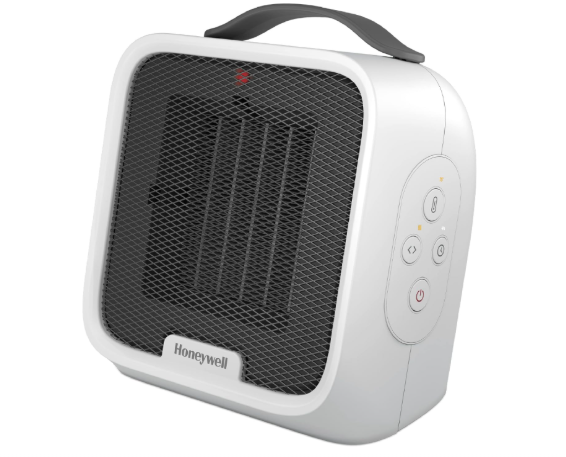
Image & Product: Amazon
Latest Alternative: The featured product is no longer available. We now recommend the Amazon Basics Ceramic Space Heater
Key features to consider include safety elements like tip-over and overheat protection, portability for easy moving, and adjustable thermostat controls. Ceramic and infrared models are popular for their quick, efficient heat transfer, ensuring comfort without a significant increase in your electricity bill.
After weeks of comparative testing, we found some of the best low wattage space heaters are given below.
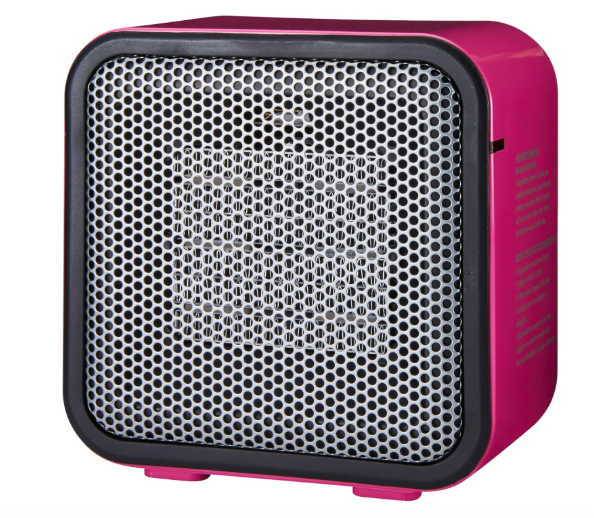
1. Amazon Basics Mini Desktop Heater
Wattage: 500-Watt
Special Feature: Overheat Protection
Key Features
- Compact and lightweight personal heater
- Energy-efficient 500-watt low setting
- Easy-carry handle for portability
- Simple manual control dial
- Perfect for warming feet and hands
- Cool-touch exterior for safety
Specialty
- Ideal for small personal spaces
- Affordable and basic functionality
- Prevents overheating automatically
Compatible For
- Desktop and office use
- Small rooms and dormitories
- Personal use under a desk
This 500-watt heater is perfect for the keyword because it provides targeted warmth with minimal energy consumption, making it a true low-wattage solution for personal comfort.
Special Note: Always place the heater on a stable, level surface. Keep it away from water and flammable materials.
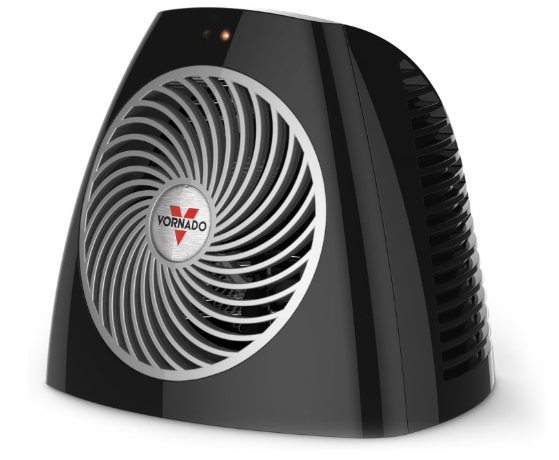
2. Vornado VH202 Personal Space Heater
Special Feature: Automatic Climate Control
Key Features
- Utilizes Vornado’s signature Vortex air circulation
- Automatic climate control maintains room temperature
- Two power settings for customized warmth
- Safety shut-off system for peace of mind
- Glare-free night light option
Specialty
- Evenly circulates heat throughout the room
- Automatically adjusts to maintain your set temperature
- Trusted Vornado air circulation technology
Compatible For
- Small to medium-sized rooms
- Bedrooms and living areas
- Users wanting whole-room heating
This Vornado model is a top choice for “best low wattage space heater” as its 750-watt setting offers efficient heating, and its vortex technology distributes warmth effectively without needing high power.
Special Note: Ensure the inlet and outlet grilles are unobstructed for safe operation.
3. Honeywell UberHeat Ceramic Heater
Special Feature: Tip-Over Switch
Key Features
- Small, sturdy ceramic design
- Two easy-to-use heat settings
- Customizable thermostat control
- Automatic tip-over safety switch
- Overheat protection for added safety
- Cool-touch carry handle
Specialty
- Fast, focused heat from ceramic technology
- Portable and easy to move around
- Multiple safety features for secure use
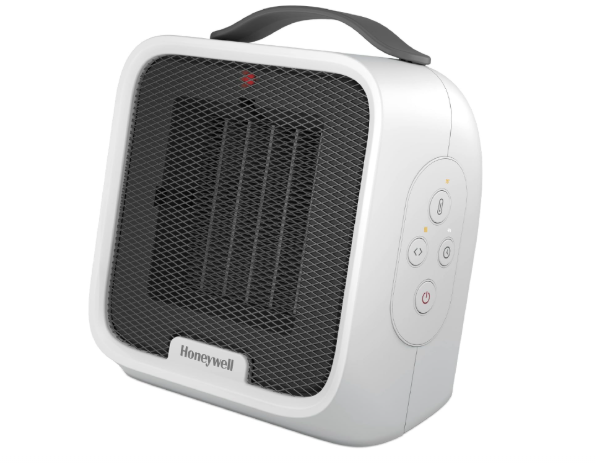
Image & Product: Amazon
Latest Alternative: The featured product is no longer available. We now recommend the Amazon Basics Ceramic Space Heater
Compatible For
- Personal spaces and offices
- Tabletops and floors
- Quick warmth in a compact area
The Honeywell UberHeat is perfect for this keyword due to its energy-saving 750-watt mode and ceramic element, which provides quick, personal warmth with robust safety features.
Special Note: This heater has hot surfaces, keep away from children and pets.
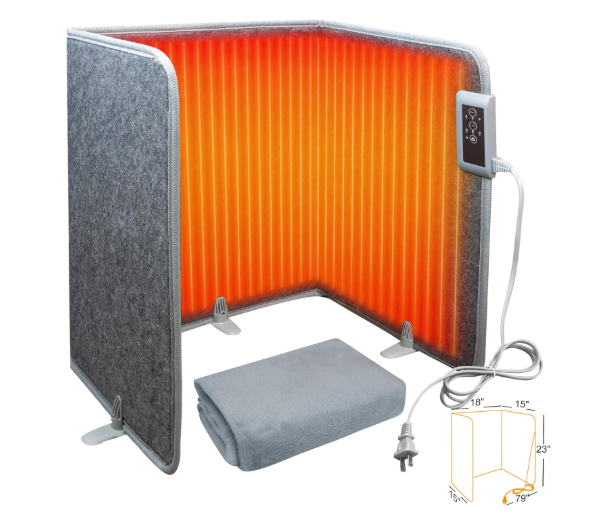
4. Foldable Infrared Radiant Heater
Wattage: 235-Watt
Special Feature: Foldable Handle
Key Features
- Energy-saving infrared heating technology
- Foldable handle for compact storage
- Two heat levels to choose from
- Lightweight and highly portable design
- Overheat protection for safety
- Quiet operation for peaceful use
Specialty
- Heats objects and people directly
- Extremely portable with a unique folding handle
- Efficient low 235-watt setting
Compatible For
- Travel, camping, and RVs
- Small personal areas
- Users needing a space-saving design
With an ultra-low 235-watt setting and a foldable design, this heater is ideal for the keyword, offering efficient infrared warmth in a highly portable package.
5. Comfort Zone Mini Heater with Digital Display
Special Feature: Adjustable Thermostat
Key Features
- Digital display for easy reading
- Programmable timer function
- Adjustable thermostat for precise control
- Remote control for convenient operation
- Energy-saving mode options
Specialty
- User-friendly digital controls and remote
- Programmable timer for automatic shut-off
Compatible For
- Offices and bedrooms
- Users who prefer digital interfaces
- Situations requiring preset operation times
This heater’s 750-watt mode and programmable features make it a smart, low-wattage option that prevents energy waste while providing customizable comfort.
Special Note: Use only with a properly grounded outlet.
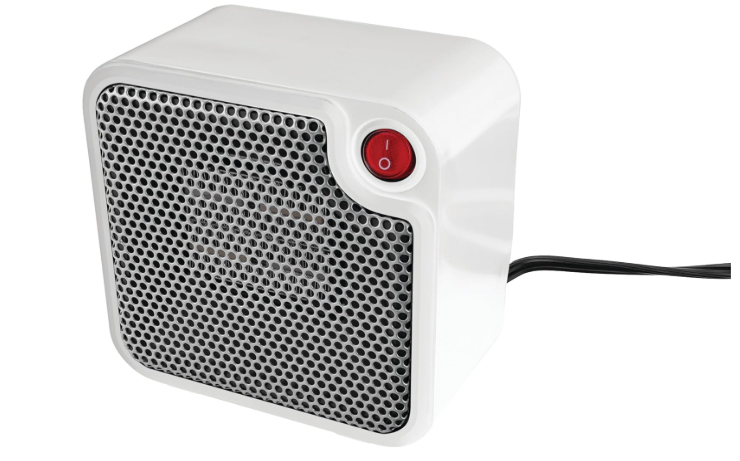
6. Performance Tool W5011 Personal Heater
Special Feature: Built-in Fan
Key Features
- Low 500-watt power consumption
- Built-in fan for air circulation
- Simple on/off switch operation
- Compact and durable metal housing
- Ideal for focused personal heating
- Overheat protection included
Specialty
- Can be used as a fan in warm weather
- Rugged metal construction
- Pure, simple personal heating
Compatible For
- Garages and workshops
- Personal use in small spaces
- Year-round air circulation
This 500-watt unit perfectly fits the keyword by offering basic, efficient heat for personal spaces, with the added versatility of a fan for non-winter months.
Special Note: The metal casing may become hot during use.
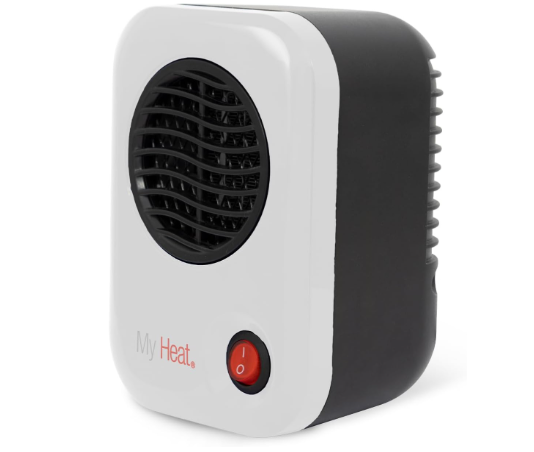
7. Lasko MyHeat Personal Heater
Special Feature: Overheat Protection
Key Features
- Classic, compact red design
- Energy-efficient 200 -watt operation
- Silent radiant warmth
- Simple plug-in operation
- No assembly required
Specialty
- Exceptionally quiet performance
- Perfect for warming feet under a desk
- Very affordable and easy to use
Compatible For
- Desktop and tabletop surfaces
- Small apartments and dorms
- Direct personal heating
Its 200 -watt output and ultra-quiet, radiant heat make the Lasko MyHeat a perfect match for the keyword, providing subtle warmth without high energy costs or noise.
Special Note: Allow ample space around the heater. Do not use with an extension cord. This information is based on product listings and we recommend verifying details before purchase.
8. Brightown Mini Desk Heater
Special Feature: Energy Efficient
Key Features
- Two low-wattage heat settings
- Ceramic heating element for fast warmth
- Tip-over and overheat protection
- Lightweight and portable build
- Easy-to-clean design
Specialty
- Starts at a very low 400 watts
- Heats up quickly and safely
Compatible For
- Small offices and studies
- Bedside tables
- Energy-conscious consumers
Maximizing Warmth in Small Spaces with Low Wattage Heaters
Living in a compact apartment or a cozy studio presents unique heating challenges. Cranking up the central heat for one room feels wasteful, and a large, powerful heater is simply overkill. This is precisely where a low wattage space heater demonstrates its brilliant efficiency. These devices excel in personal climate control.
Instead of attempting to heat an entire open-plan area, they focus on creating a personal comfort zone. Imagine sitting at your desk; a low wattage heater warms you and your immediate surroundings directly. This targeted approach means the appliance consumes significantly less electricity while still providing the warmth you need.
The principle revolves around heat density. A smaller volume of air requires less energy to warm up. Ceramic elements or infrared panels in these heaters generate warmth that is quickly absorbed by the air and objects in your near vicinity, creating a bubble of comfort without fighting the thermodynamics of a large, drafty space.
You stay warm, and your energy bill remains manageable, a perfect solution for efficient small-space living.
The Operational Mechanics of Low Wattage Heating
Well, how does a device using a third of the power of a standard heater actually keep you warm? The secret lies not in brute force, but in intelligent design and direct energy transfer. Most low wattage heaters employ one of two primary methods.
Ceramic heaters push air over a heated ceramic plate. This plate, while hot, has a large surface area that transfers warmth efficiently to the air blown across it. You receive a steady stream of heated air directly.
The other common type is the infrared heater. These work quite differently, emitting invisible infrared rays. These rays travel through the air without heating it and instead warm the solid objects they strike—your skin, your clothes, the chair you are sitting on.
It is analogous to the sun warming your face on a cold day; the air might be chilly, but you feel beautifully warm. This direct transfer of energy to people and objects is exceptionally efficient, as almost no heat is lost to the surrounding environment.
These methods prove that effective heating is more about smart application than raw power consumption.
Essential Considerations Before Purchasing a Low Wattage Heater
Selecting the right heater involves more than just picking the first model you see. A few key factors will guide you toward the perfect match for your needs.
Wattage and Heat Output
The wattage is the most critical starting point. Models typically range from 400 to 750 watts for true low-wattage operation. A 400-watt unit is superb for extreme personal space, like warming your feet under a desk. If you need to take the chill out of a small bathroom or a tiny bedroom, a 750-watt model offers more capability. Matching the wattage to your space size is the foundational step for efficient performance.
Heating Technology
Your choice of technology affects the quality of warmth. Ceramic heaters provide a stream of warm air, ideal for creating a small, convective zone of heat. Infrared models offer silent, instantaneous warmth that feels more radiant, similar to sunshine. If you dislike fan noise and want direct, immediate warmth, infrared is superior. For a more general background warmth in a very confined area, ceramic is a excellent choice.
Safety Features
Never compromise on safety. Any reputable heater must include automatic tip-over protection and overheat protection. These are non-negotiable. The tip-over switch cuts power immediately if the unit is knocked over, while the overheat protection activates if the internal components become too hot, perhaps from a blocked air vent. These features provide essential peace of mind, especially in homes with pets or children.
Portability and Size
Consider where you will move and store the heater. These units are designed for portability, but their form factors differ. Some are tall and cylindrical, others are small and boxy. Look for a lightweight design with a built-in handle. If you plan to tuck it away in a closet between uses, its physical footprint matters just as much as its heating capability.
A Guide to Safely Using Your Low Wattage Heater
Using your heater correctly ensures both safety and optimal performance. Before starting, ensure you have the heater itself and a clear, standard three-prong electrical outlet. Avoid using extension cords if possible.
Step 1: Positioning the Heater
Place the heater on a stable, level, and hard surface. Keep it at least three feet away from any potential hazards like curtains, furniture, bedding, or papers. This clear zone prevents accidental fires and allows for proper air circulation around the unit.
Step 2: Powering and Settings
Plug the heater directly into the wall outlet. Turn the power on and select your desired heat setting. Most models offer a low and high option. Start with the low setting to see if it meets your comfort needs; this is the most energy-efficient mode.
Step 3: Setting the Thermostat
If your model has a thermostat dial, turn it all the way up initially. Once the room feels comfortably warm to you, slowly turn the dial down until you hear the heater click off. This setting tells the heater to cycle on and off to maintain your preferred temperature, saving energy.
Step 4: Active Monitoring and Shutoff
Always remain aware of an operating heater. It is best practice to stay in the same room while it is on. When you leave the room or go to sleep, make a habit of turning the heater off and unplugging it. This habit is the ultimate safety measure.
Key Factors Influencing Energy Consumption
Several elements determine how much electricity your heater actually uses, even within the low wattage category.
The Thermostat’s Role
A built-in thermostat is your greatest ally for efficiency. A heater without a thermostat will run continuously, wasting power once the room is warm. A model with a cycling thermostat turns the heat on and off to maintain a set temperature. This cycling action prevents constant energy draw and is the single biggest factor in reducing overall consumption.
Insulation and Room Dynamics
Your heater does not work in a vacuum. A well-insulated room with sealed windows will retain heat far better than a drafty one. In a poorly insulated space, the heater must run more frequently to compensate for heat loss, driving up energy use. The heater’s job is to add heat; your room’s job is to keep it in.
Duration and Frequency of Use
This seems obvious, but it is worth stating: the longer the heater operates, the more electricity it consumes. Using a timer function, if available, can be a fantastic way to manage this. You could set it to run for an hour in the morning as you get ready, ensuring it does not run unnecessarily all day.
Creative Applications for Low Wattage Heaters
Beyond personal comfort, these versatile devices serve several other useful purposes.
Preventing Pipe Freezes
In a poorly insulated garage or under a sink with pipes on an exterior wall, a small amount of warmth can make a huge difference. Placing a low wattage heater in these confined spaces during a deep freeze can prevent pipes from bursting. Always ensure the area is clear of flammable materials and the heater is on a stable surface.
Creating a Warm Pet Zone
Our furry friends often feel the cold too. Positioning a heater in a corner of a room, on a low setting, can provide a comforting warm spot for a pet bed. The key is to ensure the heater has robust safety features and the pet cannot knock it over or get too close to the heating element.
Drying Small Items
In a pinch, a low wattage heater can help dry out damp shoes or small articles of clothing. Place the items a safe distance away on a hard floor, never directly on or against the heater. This method is far gentler and safer than using a high-wattage dryer or a more powerful heater.
Low Wattage Heaters Versus Standard Models
The core difference between a low wattage heater and a standard 1500-watt model is one of scope versus precision. Think of it as using a surgical instrument instead of a sledgehammer. A standard heater is designed to raise the temperature of an entire medium-sized room, maybe 150 square feet or more.
It has the power to do that job, but it also consumes electricity at a much higher rate. A low wattage heater abandons the goal of heating the entire room. Its mission is to heat you. It provides targeted, localized comfort with minimal energy expenditure.
You would choose a standard model if you need to warm a whole living room for a family gathering. You select a low wattage heater for your home office, your side of the bed, or your spot on the couch.
One is for ambient room heating; the other is for direct personal warming, making it a champion of efficiency for individual use.
Maintaining Your Heater for Longevity and Safety
Proper care for your heater is simple yet vital for both its operational life and your safety. The primary task involves keeping it clean. Dust and lint naturally accumulate inside the unit over time.
This layer of debris acts as an insulator, causing the internal components to run hotter than designed, which strains the system and can become a fire risk. About once a month during the heating season, unplug the heater and use the soft brush attachment of your vacuum to gently clean the air intake and outlet grilles.
Wipe the exterior with a dry or slightly damp cloth. Never immerse the heater in water. At the end of the winter season, give it a thorough cleaning before storing it in a dry place.
This minimal routine prevents performance degradation and ensures the safety mechanisms, like overheat protection, are not compromised by internal blockages.
Practical Tips for Enhanced Heater Performance
A few simple habits can dramatically improve your experience and efficiency.
Embrace Layered Clothing
Your heater works best as a supplement, not a replacement. Wearing a sweater and warm socks allows you to set the thermostat lower or use the low power setting, reducing energy use significantly. The heater takes the edge off the chill, while your clothing does the heavy lifting.
Seal Drafts
It is counterproductive to run a heater in a room with a cold air leak. Use weather stripping around drafty windows and doors. This simple, low-cost action helps the room retain the warmth generated by your heater, allowing it to cycle on less often.
Strategic Placement for Circulation
Avoid pushing the heater into a corner. Place it in a somewhat open location where the warmed air can circulate freely around you. If you have a ceramic model with a fan, pointing it toward the center of the room can help distribute warmth more evenly in your immediate vicinity.
Identifying the Ideal User for a Low Wattage Heater
Pros
These heaters are perfect for people in specific situations. You will benefit greatly if you work from home in a small office and want to avoid heating the whole house. They are ideal for apartment dwellers seeking to lower their electric bills. Students in dorm rooms find them incredibly useful. They are excellent for taking the chill out of a small bathroom before a shower. Anyone needing warmth in a workshop or at a desk in a garage will appreciate the targeted heat.
Cons
These units are not a fit for everyone. If your goal is to heat an entire large living room or an open-plan area, a low wattage heater will prove underwhelming. They lack the power for such a task. People with significant mobility issues who cannot easily monitor a plugged-in device might be better served with a different solution.
Common Questions About Low Wattage Space Heaters
Can A Low Wattage Heater Effectively Warm A Entire Small Bedroom
It depends on your definition of effective and the room’s insulation. A 750-watt model can take the edge off in a well-insulated small bedroom, perhaps raising the temperature by a few degrees. However, it will not produce the intense, room-filling heat of a 1500-watt heater. Its best use in a bedroom is as a personal warmer, perhaps aimed at your side of the bed for comfort while reading or sleeping. For whole-room heating in anything but the tiniest, most sealed spaces, a standard heater is generally more appropriate.
Are Low Wattage Heaters Truly Safer Than Standard Models
They present a lower overall risk profile, but safety ultimately depends on user behavior. The lower wattage means heating elements and external surfaces often run at lower temperatures, reducing the chance of igniting materials they might contact. However, they can still cause fires if covered or misused. The electrical current draw is also lower, posing less risk of overloading a circuit. Their inherent safety advantage is real, but it never replaces the necessity of following all safety guidelines, such as using them on a hard surface and maintaining constant supervision.
How Does The Cost Of Running A Low Wattage Heater Compare
The operating cost is substantially lower. For illustration, a 1500-watt heater running for one hour consumes 1.5 kilowatt-hours of electricity. A 500-watt heater running for the same duration uses only 0.5 kWh. If your electricity rate is 15 cents per kWh, the standard heater costs 22.5 cents per hour to run, while the low wattage unit costs just 7.5 cents. Over an evening of use, this difference adds up, making the low wattage option a clear winner for your wallet over time, provided it meets your heating needs.
What Is The Typical Lifespan Of A Well-Maintained Low Wattage Heater
A quality low wattage heater, given proper care, should provide reliable service for five to ten years. The primary factors affecting longevity are cleanliness and how often it is used. A unit used daily for several months each year will naturally have a shorter operational life than one used occasionally. The simple components, like the fan motor and the heating element, are the usual points of failure. Keeping the interior free of dust prevents overheating and stress on these parts. There are no moving parts to lubricate, so consistent cleaning constitutes the main form of maintenance that extends its life.
Read More:
