Disclosure: As an Amazon Associate, I earn from qualifying purchases. Learn more
You’re staring at your utility bill, wondering where the money goes, or you’re the fifth person in line for the morning shower, and the hot water has officially called it quits. The promise of endless hot water and lower energy bills is tempting, but the upfront price tag gives you serious pause.
Determining if a tankless system is right for you hinges on your home’s layout, your family’s habits, and your local utility costs. You’re likely wrestling with the true long-term savings versus the significant installation cost and whether the performance will meet your expectations during a busy morning. This is a practical look at where these systems shine, where they stumble, and how to decide.
How On-Demand Water Heaters Work: A Quick Principle Explanation
Unlike a traditional tank heater that constantly heats and re-heats 40-50 gallons of stored water, an on-demand or tankless water heater creates hot water only when you need it. Think of it like a powerful, high-tech camping shower versus a large thermos. When you turn on a hot water tap, cold water travels through a pipe into the unit.
A gas burner or electric element activates instantly, heating the water as it flows through a heat exchanger. The unit shuts off when you turn the tap off. This fundamental shift from “storing and maintaining” to “creating on the fly” is the source of both its major advantages and its potential limitations. It explains why your home’s water demand pattern and flow rate are so critical to success.
The Core Appeal: What Makes Tankless Heaters Seem “Worth It”
The marketing promises are compelling because they address genuine pain points. The value rests on three main pillars.
Endless Hot Water: This is the biggest draw. A properly sized unit can provide a continuous flow, which is a game-changer for back-to-back showers. However, “endless” doesn’t mean “unlimited simultaneous use.” The unit has a maximum flow rate, so if multiple showers and the dishwasher are running at once, you can still stretch it thin.
Energy Efficiency and Operating Cost Savings: This is where potential savings live. Since the heater isn’t constantly burning fuel to keep a tank hot (standby heat loss), it uses energy only when you call for hot water. The U.S. Department of Energy estimates that for homes using 41 gallons or less per day, on-demand heaters can be 24%-34% more efficient than storage-tank models. This directly translates to lower monthly utility bills.
Space Savings and Longevity: A tankless unit is often the size of a small suitcase and can be mounted on a wall. This frees up significant floor space. Furthermore, with proper maintenance, the life expectancy of a tankless unit (15-20 years) typically surpasses that of a storage tank heater (10-15 years).
ORBEK Instant On-Demand Hot Water Heater Review & Recommendations
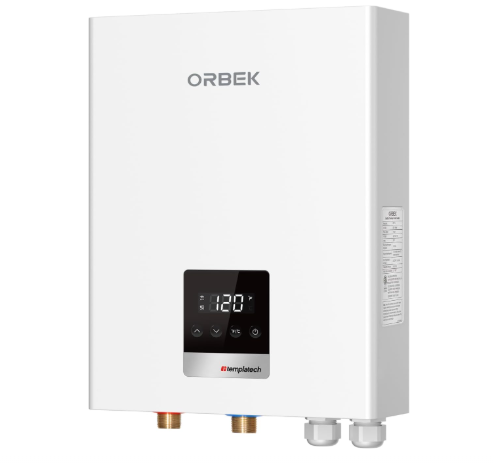
For targeted applications like a guest suite, basement apartment, or smaller home, a dedicated electric tankless unit addresses core inefficiencies. The 18kW Tankless Water Heater Electric from ORBEK exemplifies this focused approach, delivering instant hot water for 2-3 fixtures without the standby losses of a small tank.
It’s within 1℉ stable temperature technology prevents frustrating scalding or cold bursts during use, while the compact design allows for flexible indoor installation directly where the hot water is needed, eliminating long pipe runs that waste water and energy.
The 18kW ORBEK model is a practical solution for dedicated applications → View on Amazon
Breaking Down the Real Cost: Upfront Price vs. Long-Term Operation
The question is fundamentally a math problem. You must weigh the steep initial investment against the promise of monthly savings. This grid lays out the typical cost factors.
| Cost Factor | Tankless Water Heater | Traditional Tank Heater |
|---|---|---|
| Unit Purchase Price | $600 – $2,000+ | $300 – $1,200 |
| Professional Installation | $1,000 – $3,000+ | $500 – $1,000 |
| Total Upfront Cost | $1,600 – $5,000+ | $800 – $2,200 |
| Estimated Annual Operating Cost | $150 – $500 | $250 – $600 |
| Typical Lifespan | 15-20 years | 10-15 years |
| Potential Utility Rebates | Often available | Less common |
Where On-Demand Systems Can Fall Short: Common Performance Hurdles
Imagine it’s a cold winter morning, and the groundwater temperature flowing into your house is near freezing. Your tankless heater has to work much harder to raise that water to a shower-ready 105°F. This extreme temperature rise reduces the unit’s maximum flow rate—a concept known as the temperature rise limit. So, while it may deliver two nice showers simultaneously in the summer, it might struggle to supply one strong shower in the dead of winter.
Another common frustration is the “cold water sandwich.” This happens when you briefly turn the hot water off and then back on quickly, like when pausing while rinsing dishes. A small amount of cooled water stuck in the heat exchanger gets pushed out first.
Finally, there’s response time. Even the best units take a second or two to fire up and a few more seconds for hot water to travel from the unit to your faucet. In a large home, this can mean longer wait times for hot water to arrive at distant faucets, potentially wasting more water down the drain.
Key Factors That Decide If You’ll Save Money
Audit Your Current Costs: Locate your last 12 months of utility bills. Calculate your total annual spending on water heating (typically 14%-18% of a utility bill).
Estimate Your Efficiency Gain: Use DOE estimates as a guide (24%-34% savings for lower usage). Be conservative.
Calculate Projected Annual Savings: Multiply your current annual water heating cost by your estimated savings percentage (e.g., $450/year cost * 25% savings = $112.50 savings).
Get Real Installation Quotes: Have at least two licensed plumbers assess your home. They must check your gas line size, electrical service, and venting requirements. Get a detailed, written quote.
Determine Simple Payback Period: Divide your total installed cost (after any rebates) by your projected annual savings. Example: ($2,700 net cost) / $112.50 savings = 24 years.
Installation Realities: The Hidden Make-or-Break Factors
The biggest mistake is focusing solely on the sticker price of the unit. The installation can easily double or triple your total cost. A common error is underestimating the need for upgraded gas lines. Most standard residential gas lines are 1/2-inch. A high-output gas tankless heater may require a 3/4-inch or 1-inch line. Retrofitting this line can be invasive and expensive.
For electric on-demand water heaters, your home’s electrical service may be insufficient. A whole-house electric model can demand 100-150 amps alone. An upgrade to a 400-amp service may be required.
Finally, venting is critical. Direct-vent or sealed-combustion units require specific materials and a dedicated path to an exterior wall. Assuming you can use old tank heater venting is a dangerous and code-violating mistake.
Comparing Fuel Types: Are Electric On-Demand Water Heaters Worth It?
People often experience poor performance and blame the technology, when the cause is usually a mismatch between capability and demand.
Symptom: “My electric tankless heater can’t keep up with one shower if another faucet is on.”
Cause: Electric units have a hard limit based on your home’s electrical capacity. A large unit may only heat 2-3 gallons per minute. In a cold climate, that’s barely enough for one fixture.
Symptom: “My utility bills skyrocketed after installing an electric on-demand heater.”
Cause: This often points to an undersized unit working at maximum power constantly, or a home with an undersized electrical service.
For many whole-home applications, especially in colder regions, a gas-powered tankless heater is generally more capable and cost-effective to operate. Electric models excel for point-of-use applications or smaller homes in milder climates.
Maintenance Needs for Long-Term Value
To realize the promised 20-year lifespan, tankless heaters require consistent, preventative care. The most important task is annual descaling, also called flushing. Hard water minerals build up inside the heat exchanger over time. This insulates the heating elements, forcing the unit to work harder, reducing efficiency, and eventually causing failure.
The process involves circulating a descaling solution through the unit with a small pump kit. While some can do this themselves, having a professional perform an annual service ensures it’s done correctly and allows them to check for other issues. Skipping this maintenance is the single fastest way to ruin an expensive tankless unit. Budgeting for professional maintenance is a smart part of the total cost of ownership.
Making Your Decision: A Practical Homeowner’s Checklist
Use this final checklist to systematically evaluate if an on-demand water heater is worth it for your home.
☐ I have obtained and compared 2-3 detailed, written installation quotes that include all necessary upgrades.
☐ I have calculated a simple payback period using my real utility costs and am comfortable with the timeline.
☐ My home’s primary demand is for 1-2 fixtures at a time, not 3+ simultaneously.
☐ I live in a region with moderate groundwater temperatures, so I have sized the unit for my coldest expected inlet temperature.
☐ I have budgeted for and am committed to annual descaling maintenance.
☐ I have adequate space on an exterior wall for venting and unit placement.
☐ I plan to stay in my home long enough to realize the long-term savings.
☐ I have checked for and applied for any available local utility rebates or tax credits.
FAQs
What Is the Biggest Disadvantage of a Tankless Water Heater?
The most significant disadvantage is the high upfront installed cost, which can be three to four times that of a conventional tank heater. This cost is primarily for necessary retrofits to your home’s gas, electrical, and venting systems, creating a long payback period.
Can a Tankless Water Heater Supply a Whole House?
Yes, a properly sized tankless water heater can supply a whole house. The unit must be selected based on the required flow rate (gallons per minute if multiple fixtures run) and the necessary temperature rise (the difference between incoming groundwater and desired output temperature). In colder climates, this often requires a powerful gas model.
Do Tankless Water Heaters Work During a Power Outage?
No. Even gas-powered tankless water heaters require electricity to operate their electronic control boards, ignition systems, and sensors. A traditional storage tank heater may still provide the hot water stored in its tank during an outage, though it cannot reheat it.
How Much Money Will I Really Save with a Tankless Water Heater?
Your actual savings depend on your daily hot water usage, the efficiency of your current heater, and local fuel costs. A home using less than 41 gallons daily and switching from an old tank could save $100-$150 annually. A larger family may see smaller savings. Perform a cost audit for a true estimate.
Is It Hard to Get Parts for Tankless Water Heaters If They Break?
Major brands have well-established professional networks and parts distribution. However, parts are specialized, and repairs almost always require a certified technician. Choosing a reputable brand with local service support is an important part of the purchase decision.
Final Analysis: Weighing Your Investment
Determining if an on-demand water heater is a worthwhile investment ultimately comes down to a personal equation balancing upfront cost against long-term utility savings, performance needs, and maintenance commitment. For the right homeowner—with suitable infrastructure, moderate simultaneous demands, and a long-term outlook—a tankless system provides excellent value. For others, the significant installation hurdles and longer payback period make a modern, high-efficiency storage tank a more pragmatic choice. Move beyond marketing and assess your home’s specific realities with detailed quotes and real calculations.
Worth Reading Next:
